Faces of Discovery:Chaska Walton, PhD(Part 2)
2 min read
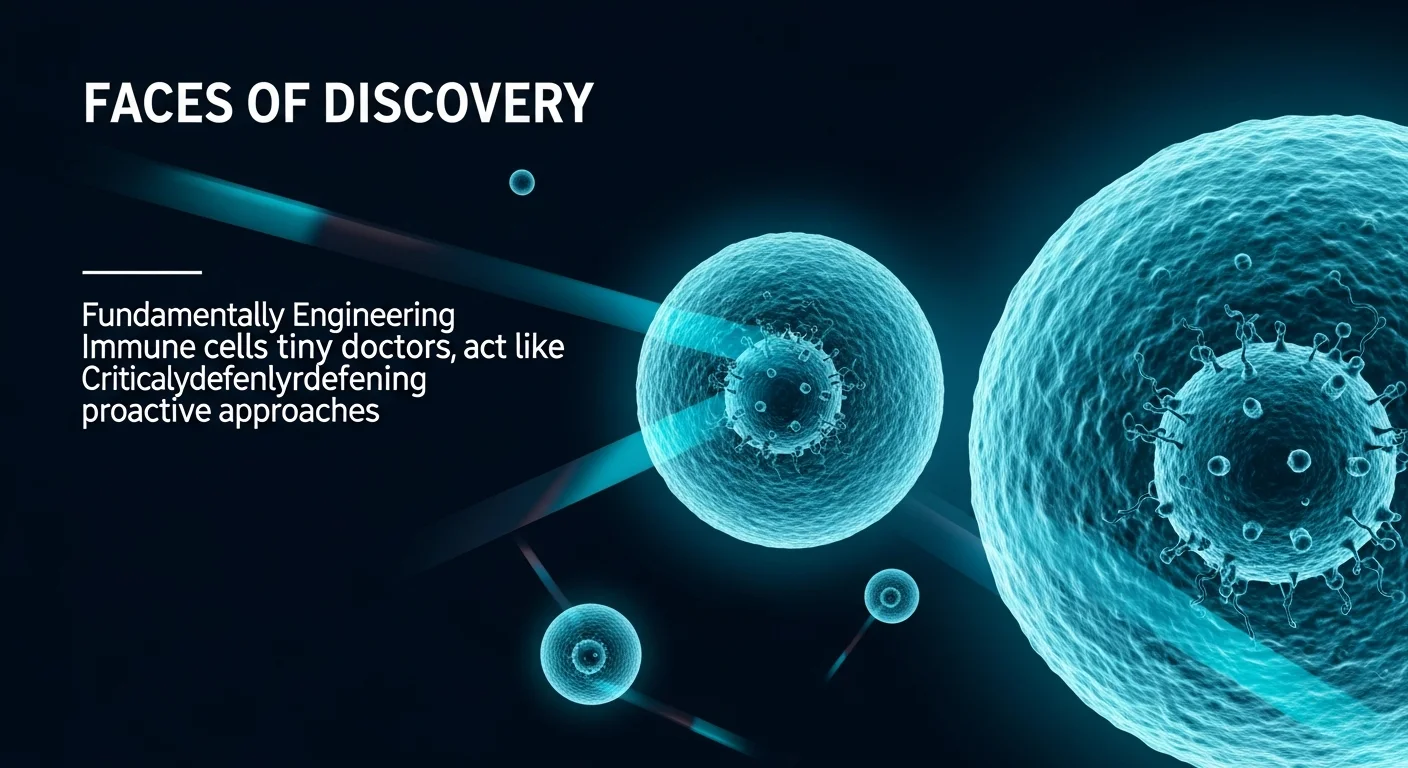
Fundamentally, Chaska Walton is engineering immune cells to act like tiny doctors inside the body. Specifically, they modify cells to detect early signs of Alzheimer’s disease and deliver treatment precisely. Critically, this approach can tackle multiple disease problems at once, unlike current medicines.
Significantly, these engineered cells could create a protective “secondary immune system.” Correspondingly, the body would manufacture its own medicine exactly where needed. As a result, treatment becomes proactive, continuous, and built-in, reducing the need for hospital visits and systemic drug side effects.
Importantly, this work points to a future where medicine is internal and self-renewing. Ultimately, it could make currently incurable diseases treatable, changing how we all experience health and aging.
| Aspect | Current Medical Practice | Future Innovation (Based on Walton’s Research) |
|---|---|---|
| Disease Detection | After symptoms appear, often late-stage diagnosis | Early detection by engineered immune cells acting as “mini physicians” |
| Treatment Delivery | Systemic drug administration, affecting the whole body | Targeted, on-demand delivery directly to disease sites by smart cells |
| Therapy Approach | Single-drug treatments targeting one aspect of disease | Combination therapies via programmable cells tackling multiple pathologies simultaneously |
| Health |
Engineered Immune Cell Therapy
Furthermore, Chaska Walton’s work focuses on engineering smart cells to deliver precise therapies. Consequently, this approach could shift medicine from reactive to proactive. Similarly, their research on programmable CAR-Treg cells offers a new way to tackle complex diseases. Moreover, this technology promises a future where treatment is built into the body. Additionally, it can produce medicines locally, reducing side effects. Notably, this represents a major step toward personalized, continuous healthcare for everyone.
Redefining Proactive Healthcare
“I believe that in the next five to ten years, work from pioneer laboratories like ours will begin to introduce a new idea into mainstream thinking: that the future of medicine lies in a secondary immune system engineered to cure disease.”
Ultimately, Dr. Walton’s research pioneers cellular physicians. In conclusion, this offers a future of proactive healthcare. Looking ahead, such living therapies may transform how we manage chronic illness. Finally, this science brings profound hope for healthier lives for everyone.
Ultimately, this work points toward medicine that prevents illness rather than just treating symptoms. Consequently, living cells can patrol the body to find and fix problems early. Therefore, health becomes a built-in function, not an external fix.
In summary, engineered cells could serve as a lifelong repair system inside everyone. Accordingly, treatment may happen without frequent clinic visits or systemic drugs. As a result, people might stay well longer with less medical intervention.