
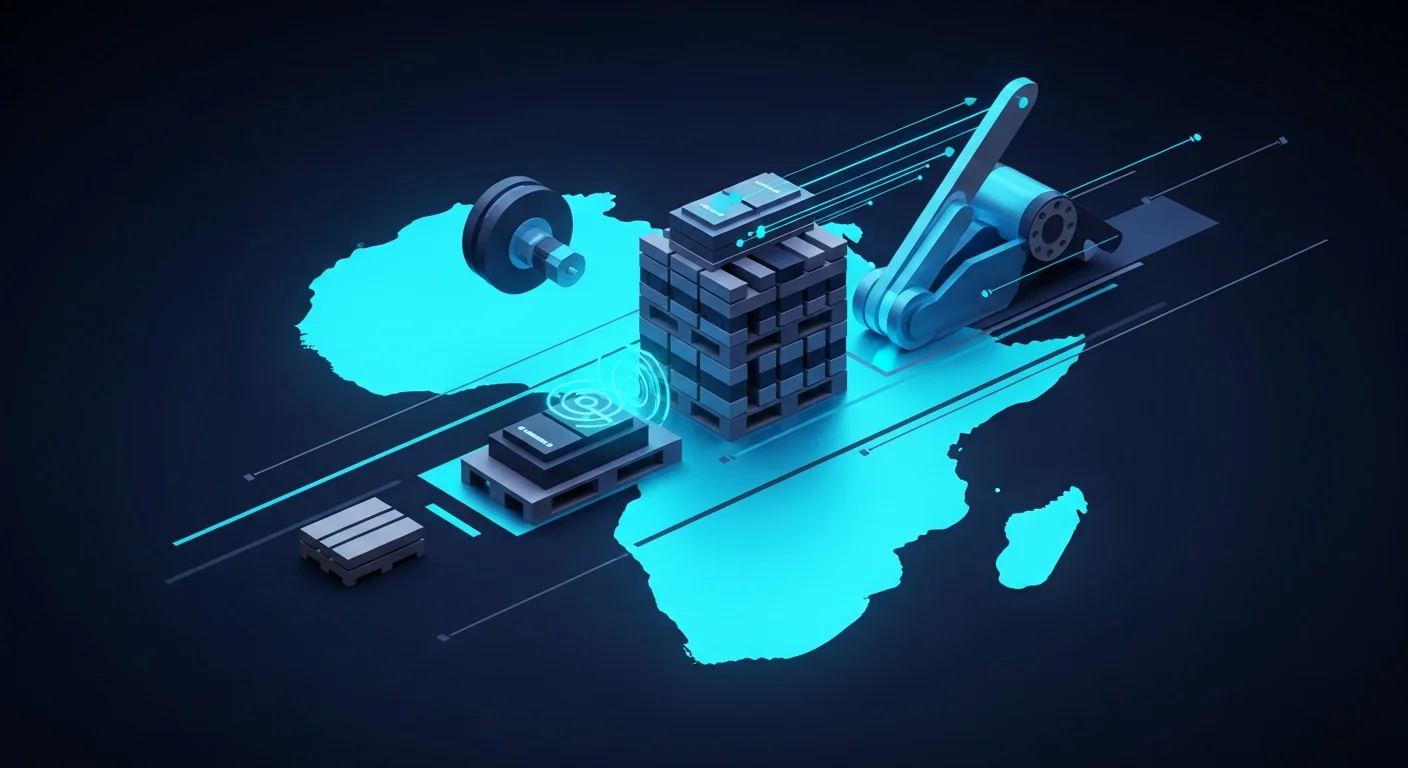
Yaskawa and Dale Automation expand robotic palletizing in southern Africa
2 min read
Certainly, many factories in southern Africa face big challenges. Currently, rising costs and high demand for products create pressure. Therefore, they need smart ways to produce more goods safely and fast.
Fundamentally, this is why two companies, Yaskawa and Dale Automation, decided to work together. Together, they combine robotic palletizing with smart conveyor systems. As a result, their partnership helps factories handle products quickly and with less strain on workers.
As a result, using these automated systems boosts efficiency and keeps workers safe. Moreover, it prepares factories for future growth. Ultimately, this teamwork shows how technology can solve important business problems.
| Operational Aspect | Before Automation | After Automation |
|---|---|---|
| Palletising Method | Semi-automated machines prone to jamming; required constant supervision | Yaskawa PL190, PL320 & PL500 robots with precision handling and end-effectors (magnet/suction) |
| Throughput & Uptime | Limited manual lines; inconsistent output during peak periods | Up to 8,000 loaves/hour/line with 24/7 production across multiple plants |
| Workforce Role | Manual labour in high-heat environments (up to 180 °C); high ergonomic risk | Supervisory & technical roles supported by in-house mechatronics and robot-operation training |
| SKU Flexibility | Dedicated machines handling limited product variation; space constraints | Scalable robot programming and optimised conveyor in-feed systems for future SKU changes |
| Safety & Consistency | Frequent product damage, manual intervention, higher downtime | Reduced downtime, improved accuracy, minimised manual handling and transport damage |
Robotic Palletizing in Southern Africa
In addition, this partnership shows how robotic palletizing can solve rising labour costs in southern African manufacturing. Moreover, people now move from manual work to skilled roles through mechatronics training. Consequently, factories achieve 24/7 output with less product damage. Similarly, everyone benefits when automation boosts safety in high-heat settings. Furthermore, this model is scalable, helping them meet growing processed food demand across the region.
Transforming African Manufacturing Floors
This indicates increased automation adoption in response to regional pressures. Therefore, the partnership effectively meets rising demand. Similarly, efficiency and throughput have improved. Moreover, the workforce has transitioned to technical roles. In contrast, manual processes are less efficient. Consequently, operational safety has been enhanced. Thus, the system supports scalable production. Hence, it prepares businesses for future growth. Accordingly, long-term value is realized. As a result, tangible benefits are demonstrated for inclusive, modern manufacturing.
“We see demand for robotic palletising growing, not just locally but across the region,”
Ultimately, this partnership shows how robotic palletizing solves real manufacturing problems. In conclusion, it boosts efficiency and protects workers. Looking ahead, the technology scales easily for future needs. As a result, companies gain a strong competitive edge. Therefore, it reduces manual strain and errors. Thus, operations run smoothly around the clock. Hence, it offers long-term value. In summary, this approach is smart and effective. To conclude, it prepares businesses for growth. Finally, it makes southern African manufacturing more future-ready.
Ultimately, this partnership successfully addresses southern African manufacturers’ needs for efficiency and growth. Consequently, it enhances workplace safety by moving staff from strenuous tasks to technical roles. Thus, the solution delivers immediate gains in output and product quality.
Therefore, the project establishes a scalable model for future regional automation. As a result, businesses are better equipped to handle growing demand and evolving production requirements. In summary, the collaboration provides a clear, practical path toward modernized and resilient manufacturing.