Fast-Tracking Autonomy: U.S. Navy’s MUSV Program Accelerates Seven Designs From Blueprint to Ocean
2 min read
Consequently, successful demonstrations could lead to Navy leasing by 2027. Essentially, this marketplace aims to quickly buy autonomous ships. Importantly, these vessels will support many future missions. Indeed, this is a key step for the Navy’s plans.
| Aspect | Details | Timeline / Status |
|---|---|---|
| Marketplace Launch | More than two dozen MUSV designs submitted by industry partners | March 2025 (first iteration closed in April) |
| Prototype Selection | Seven submissions advanced to prototype evaluation phase; companies not yet publicly named | Announcement expected within days |
| At-Sea Demonstrations | Selected partners must prove system maturity through successful sea trials | Must be completed prior to October 2026 |
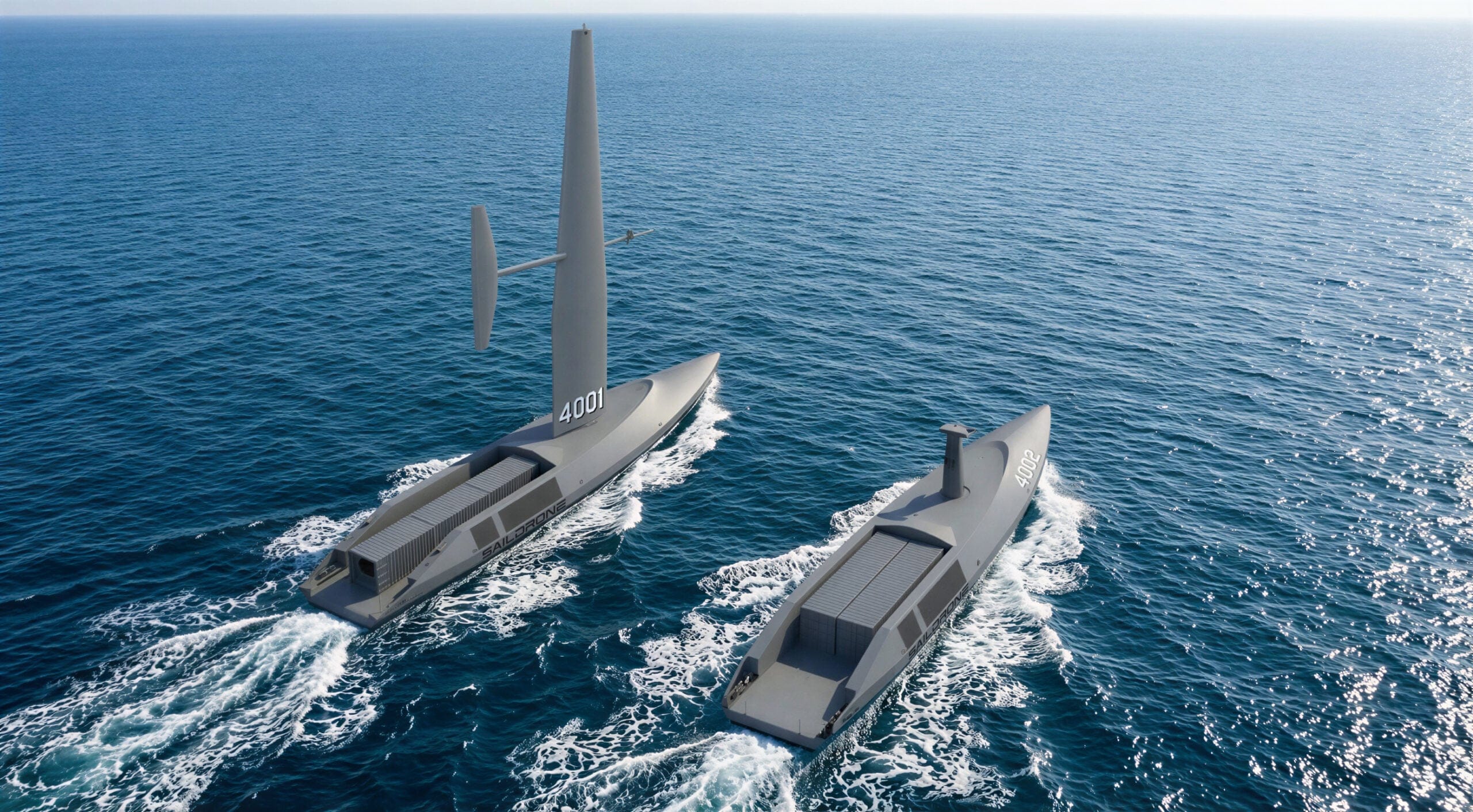
| Vessel Requirements | Carry ≥2 forty-foot containers; 2,500 NM range at 25 knots in Sea State 4; 25 MT payload capacity | Defined in solicitation document |
| Leasing / Procurement | Vessels available for Navy leasing or procurement to support tailored force packages and autonomous missions | Fiscal Year 2027 |
Navy Advances MUSV Prototypes
Advancing Autonomous Naval Capabilities
“There’s a number of missions that we could immediately use these vessels for, and that is part of the strategy now, is that we will now have a skillful way to procure vessels that meet specific mission profiles.”
Ultimately, this selection moves seven designs into the vital prototype phase. In summary, successful at-sea demonstrations will prove their readiness for future missions. Looking ahead, the Navy aims to have these vessels available for leasing or procurement by 2027.
Ultimately, the Navy’s marketplace has advanced seven medium unmanned surface vessel designs to prototype evaluation. Consequently, selected industry partners must complete at-sea demonstrations to prove system maturity by 2026. Thus, successful vessels could be available for leasing or procurement in 2027.
In summary, this approach aims to streamline autonomous vessel acquisition for diverse missions. Accordingly, the strategy seeks to meet specific operational needs efficiently. Therefore, it fosters competition and accelerates technology integration. In conclusion, this method builds a foundation for future naval autonomy.