Ready to Fight, But Can They Last? The Pacific’s Logistical Challenge
2 min read
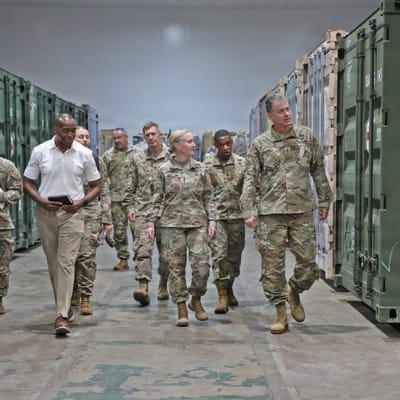
Consequently, leaders are focused on solutions. For example, they are pre-positioning equipment with allies and building repair centers in places like Australia and Japan. Thus, the goal is to project power forward, so they are not waiting for broken things to cross the ocean during a crisis.
| Category | Challenge | Strategy/Initiative |
|---|---|---|
| Logistics Distance | Vast Pacific distances (e.g., 5,000+ mile supply lines) with limited forward logistics nodes | Pre-positioning equipment; building joint interior lines; establishing distribution centers with allies |
| Equipment Repair | Delays from sending broken equipment back to continental U.S. (e.g., 30-day sail from Australia) | Forward repair in allied countries (e.g., South Korea, Japan, Australia, Philippines) using expanded contracts |
| Industrial Capacity | U.S. commercial shipbuilding capacity at ~0.1% vs. China’s over 50% | Supercharging defense industrial base; innovating |
Pacific Sustainment Challenges
In addition, the military’s “fight tonight” readiness in the Pacific relies on solving massive logistics problems. Consequently, they now focus on repair forward strategies instead of long shipments. As a result, forces pre-position gear with partners near potential conflicts. Therefore, everyone agrees local industrial bases are key. Similarly, sustainment is now seen as a core warfighting function. Moreover, success depends on moving supplies before a crisis starts. Furthermore, distance remains a critical, ongoing challenge for people in the region.
Logistics Challenges Threaten Pacific Readiness
This indicates that logistics are a critical challenge for operations in the Pacific. Therefore, forward positioning of equipment is essential. Similarly, forward repair capabilities are vital for readiness. Moreover, sustaining operations requires a robust industrial base. Consequently, forces must be present before conflict starts. Thus, sustainment is a core warfighting function. Hence, allies are focusing on these solutions. Accordingly, the ability to project power depends on this. As a result, readiness requires constant innovation.
“We cannot win if our supply lines are 5,000 miles long.”
Ultimately, the military’s readiness in the Pacific depends on solving complex logistics challenges. Therefore, forward repair capabilities and pre-positioned supplies are critical. Thus, partnerships with allies will strengthen this vital sustainment network. Finally, ensuring these systems are resilient is a shared responsibility for a secure and peaceful region.
Ultimately, the U.S. military acknowledges the immense logistical challenge in the Pacific, where vast distances strain supply lines. Consequently, its “fight tonight” readiness depends on pre-positioning equipment and repairing gear forward with regional partners. Therefore, sustaining a conflict requires moving assets before hostilities begin, not after. Thus, success hinges on these adaptations to the tyranny of distance.
In conclusion, the strategic verdict is cautious. Accordingly, while the military is actively building a more resilient supply network, the difficulty remains profound. As a result, the ability to sustain a prolonged fight is not guaranteed and requires constant innovation. In summary, preparedness is improving, but the core challenge defines the region’s strategic reality.