Greenpeace underwater robot stages deepest-ever protest on Arctic seabed
2 min read
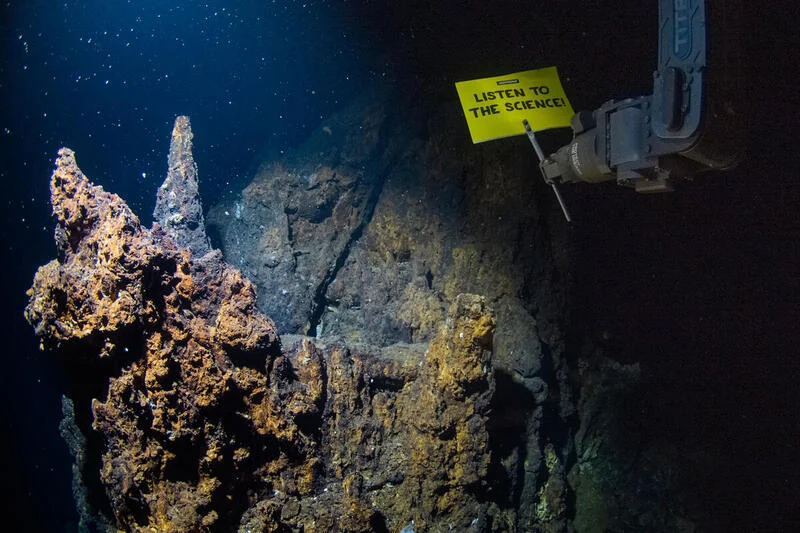
Notably, Greenpeace used an underwater robot for their deepest-ever protest. They sent the robot 2,300 meters down into the Arctic Ocean. Consequently, it held a banner that read “LISTEN TO THE SCIENCE!” Furthermore, this location is a special deep-sea area called Loki’s Castle.
Importantly, the robot’s mission highlights serious environmental threats. Industrial activities like deep-sea mining could damage these unique ecosystems. Therefore, the protest calls on world leaders to protect the oceans. Critically, Greenpeace is asking them to honor their promises for ocean conservation.
| Aspect | Details | Significance |
|---|---|---|
| Protest Depth & Technology | Banner deployed at 2,315 m below sea level using ROV Holly, a remotely operated vehicle | Deepest banner protest in history, demonstrating advanced subsea robotics for activism |
| Location — Loki’s Castle | Hydrothermal vent field along the Arctic Mid-Ocean Ridge; black smokers emitting 300–320 °C fluid | Considered a “cradle” of complex life — microbes here resemble Earth’s distant ancestors; critical to understanding the origins of life |
| Industrial Threat | Norwegian government opened the area for deep-sea mining in 2024; plans later halted after protests from scientists, fishermen, and environmental groups | Deep-sea mining risks irreversible habitat destruction and possible species extinction in unexplored biodiversity hotspots |
| Scientific Mission | Deep Arctic Expedition livestreaming research on Arctic seamounts and vent fields via YouTube | Raises public awareness of vulnerable ecosystems while advancing peer-reviewed deep-sea science |
| Policy Demands | “Listen to the Science!” — honour the 30%-by-2030 ocean protection pledge and impose an immediate moratorium on deep-sea mining | Aligns with the UN Ocean Treaty framework to create a global network of ocean sanctuaries and safeguard marine resilience |
Underwater Robot Deep-Sea Protest
In addition, this underwater robot protest shows how technology can give everyone a voice for the planet. Moreover, deep-sea ecosystems like Loki’s Castle need protection because they may hold keys to how life began. Consequently, deep-sea mining poses serious risks that could hurt these fragile habitats forever. Therefore, people and world leaders must listen to the science and act now. Furthermore, using robotics for awareness makes sure no one can ignore what lies below.
Tech-Driven Deep-Sea Advocacy Impacts
This indicates the deepest-ever seabed protest, using technology to amplify a scientific message. Therefore, the action demands world leaders fulfill their promises to protect oceans. Similarly, the protest highlights unique deep-sea biodiversity hotspots crucial to all life. Moreover, these ecosystems face threats from human expansion. In contrast to inaction, science shows clear limits. Consequently, we can protect our shared ocean through decisive policy.
“World leaders have already promised to protect 30 percent of the oceans, now they must listen to the science and actually do it.”
Ultimately, this protest shows the power of technology for ocean advocacy. In summary, world leaders must listen to science and protect vulnerable deep-sea ecosystems. Looking ahead, banning deep-sea mining will help these unique habitats survive for everyone.
The Autonomous Era: Ocean Robotics and Environmental Protest
Deep Science: Exploring the Hydrothermal Vents of Loki’s Castle
Ultimately, this innovative protest highlights the fragile beauty of deep-sea life. In conclusion, it uses accessible technology to make a powerful scientific point. Therefore, the action underscores the urgent need to protect untouched ecosystems.
Thus, expanding industrial activity like mining poses a clear threat to this unique environment. Consequently, leaders must honor their promises to create marine sanctuaries. Accordingly, a global pause on deep-sea mining is a necessary first step toward ocean recovery.