Fine-Tuning NVIDIA Cosmos Predict 2.5 with LoRA/DoRA for Robot Video Generation
2 min read
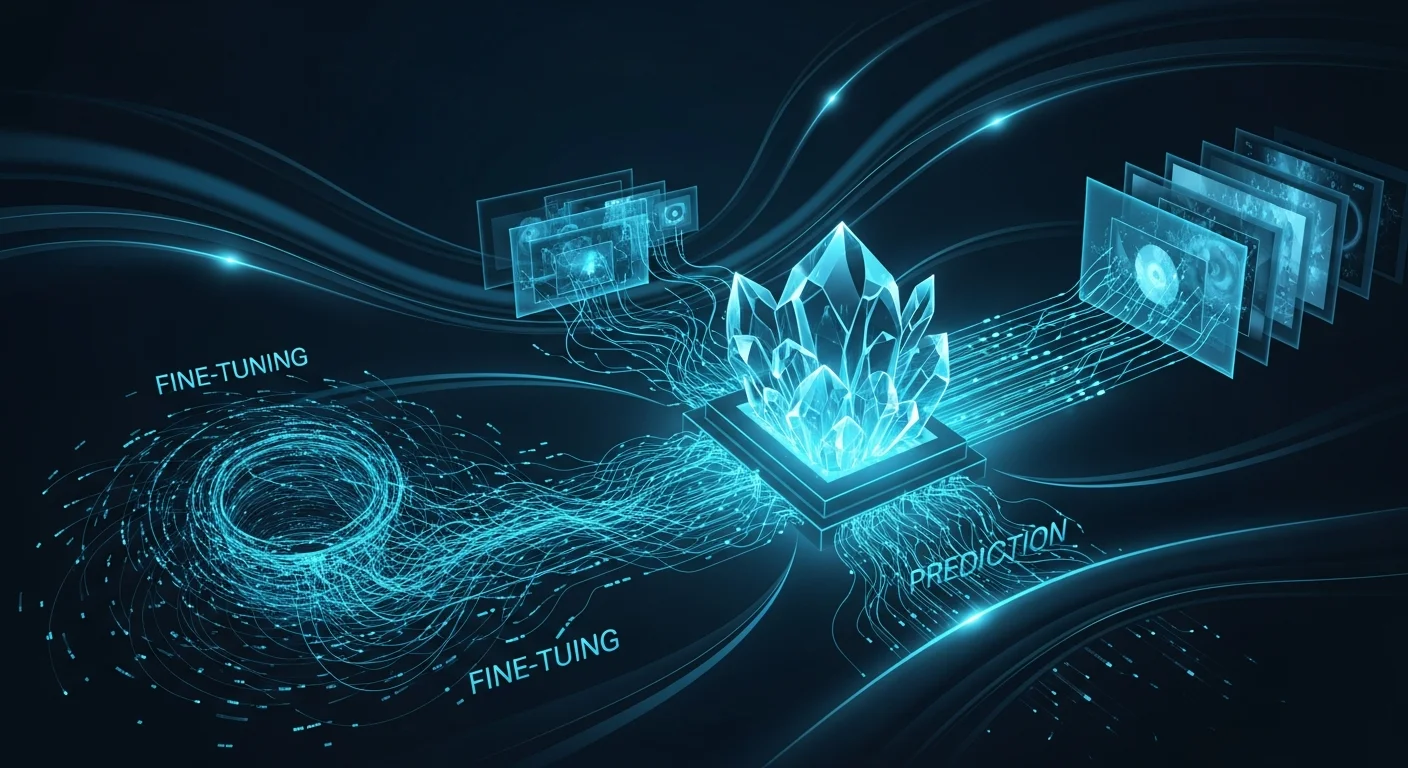
Moreover, this special process uses methods called LoRA/DoRA. As a result, they allow the model to learn new tasks quickly and efficiently.
Therefore, developers can create more advanced robotic systems. Consequently, this helps them teach robots by using realistic, generated videos.
| Parameter / Aspect | LoRA Fine-Tuning | DoRA Fine-Tuning |
|---|---|---|
| Core Mechanism | Adds low-rank decomposition matrices (A·B) to existing weight matrices; updates only the low-rank adapters | Decomposes weights into magnitude and direction components; applies LoRA-style updates only to the direction vector |
| Trainable Parameters | ~0.1–2% of total model parameters (rank-dependent) | Slightly higher than LoRA due to additional magnitude vectors (~0.2–3%), but still a small fraction of the 2.5B Cosmos parameters |
| Robot Video Generation Quality | Good temporal consistency; may struggle with fine-grained articulated motion (gripper actions, joint rotations) | Improved directional weight learning yields sharper motion fidelity; better at capturing nuanced robotic manipulation trajectories |
| Training Efficiency & VRAM | Lower VRAM footprint; faster convergence on small robot-specific datasets (~hours on a single A100) | Marginally higher memory overhead from magnitude tracking; comparable training time with potentially fewer epochs needed |
| Best Use Case | Quick prototyping; large-scale robotics datasets where slight quality trade-off is acceptable; multi-task adapter swapping | Precision-critical scenarios (surgical robots, delicate pick-and-place); when full fine-tuning is infeasible but higher fidelity is required |
Adapting NVIDIA Cosmos Predict 2.5
Moreover, fine-tuning large models like Cosmos Predict 2.5 is key for specific tasks. Consequently, methods like LoRA/DoRA let people efficiently adapt them. Additionally, this creates high-quality robot video generation for training. Therefore, everyone benefits from more capable and accessible AI systems.
Future of Robot Learning
“Fine-tuning large vision-language models with efficient methods like LoRA and DoRA is essential for scaling robot video generation, as it reduces computational overhead while enabling precise adaptation to real-world robotic tasks.”
Ultimately, this fine-tuning approach shows transformative potential. In conclusion, it makes advanced robotics more accessible. Looking ahead, we can expect more agile and capable machines. As a result, industries will see new efficiencies. Therefore, it is a significant step for inclusive tech development. Thus, we move toward a more automated future. Hence, this work empowers diverse creators. In summary, small models can have a big impact. To conclude, innovation continues to accelerate. Finally, we all benefit from these advancements.
Ultimately, this fine-tuning method makes advanced video generation more efficient and accessible. Consequently, more creators can explore robotic applications without massive computational resources. Therefore, the approach offers a practical path toward better AI tools for everyone.
In summary, the strategy balances performance with responsible development. Accordingly, it fosters innovation while considering broad usability. As a result, the technology becomes a more inclusive foundation for future progress.