Decoding the Brain’s Genetic Wiring Map – Neuroscience News
2 min read
Moreover, researchers used a new machine learning tool to prove this works on a whole-brain scale. This research builds on the chemoaffinity theory, which suggests neurons follow chemical signals to find their partners. Consequently, these findings give people new ways to study how brains develop and what happens in certain disorders.
| Feature | Distance-Based Prediction | SPERRFY Gene Expression Gradient Prediction |
|---|---|---|
| Prediction Performance Score | 0.70 (on a 0–1 scale) | 0.88 (on a 0–1 scale) |
| Methodology | Based solely on physical distance between brain regions | Uses overlapping patterns of gene activity across 763 genes in 213 brain regions |
| Brain Organization Level | Single-level spatial analysis | Two-level: broad patterns for interregional organization, detailed patterns for intraregional connections |
| Chemoaffinity Theory Support | Inconclusive — cannot validate molecular gradient-based wiring | Fully validates Sperry’s 1963 theory across the whole brain, not just simple circuits |
| Applicability | Limited predictive power for complex neural wiring | Identifies candidate wiring genes and applies to any species with connectome and gene expression data (mice, humans, marmosets, fruit flies) |
Brain’s Genetic Wiring Map
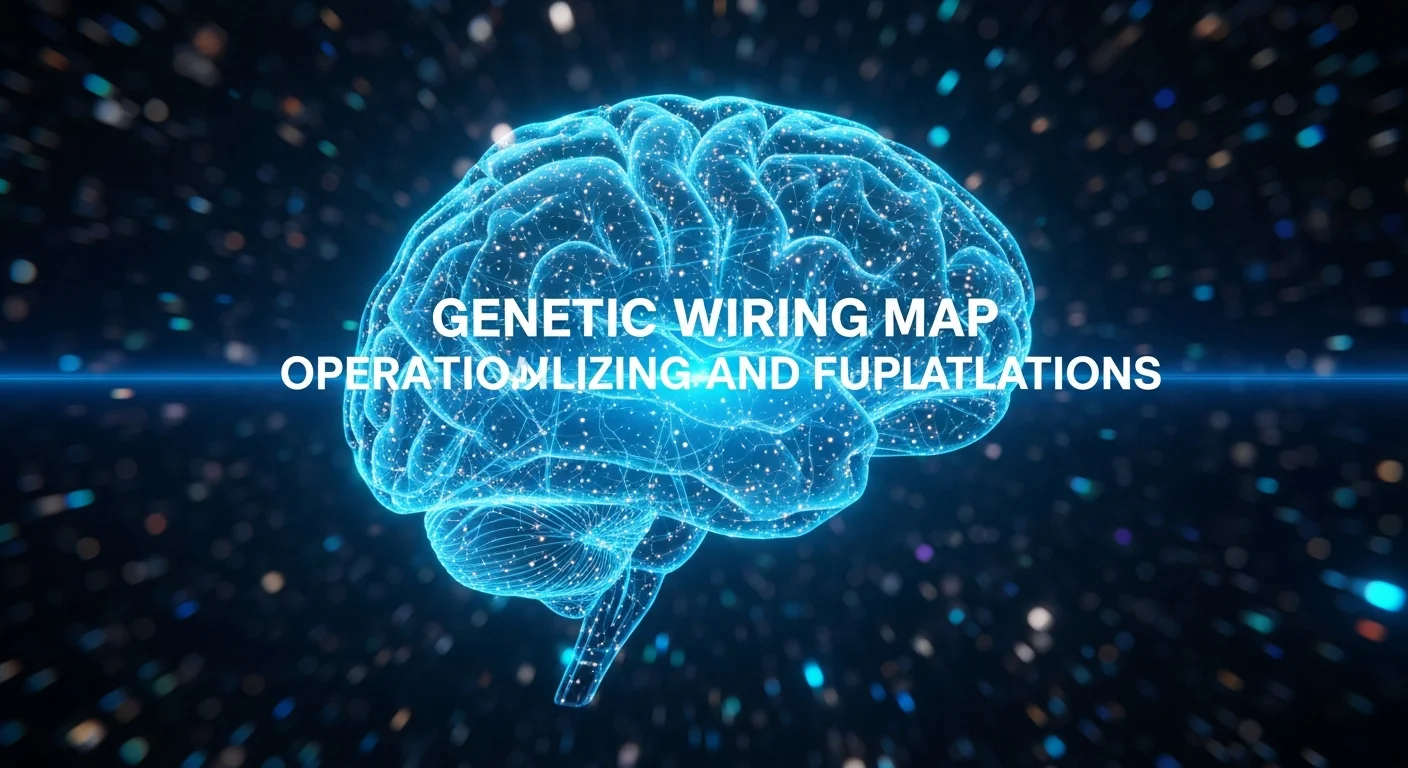
In addition, researchers have uncovered that gene expression gradients act like a molecular GPS, guiding neurons to their correct destinations across the entire brain. Consequently, this proves a long-held chemoaffinity theory works for complex circuits, not just simple ones. Therefore, everyone can understand that brain wiring follows an elegant genetic blueprint, offering new hope for studying neurodevelopmental disorders.
Operationalizing Neural GPS
Ultimately, this research confirms that a genetically encoded “molecular GPS” guides neurons throughout the entire brain. In conclusion, it provides powerful, large-scale validation of a foundational theory. Looking ahead, this opens new paths to understand brain development and related disorders.
Notably, this study confirms that a molecular GPS system, encoded by overlapping gene activity, guides the wiring of the entire brain. This validates and significantly expands a theory previously thought to apply only to simple neural circuits.
Importantly, the brain’s wiring operates on two levels, with broad patterns organizing regions and finer patterns directing specific connections. This powerful computational approach offers a new way to understand brain development and could help explore disorders related to neural wiring.