Article Title
2 min read
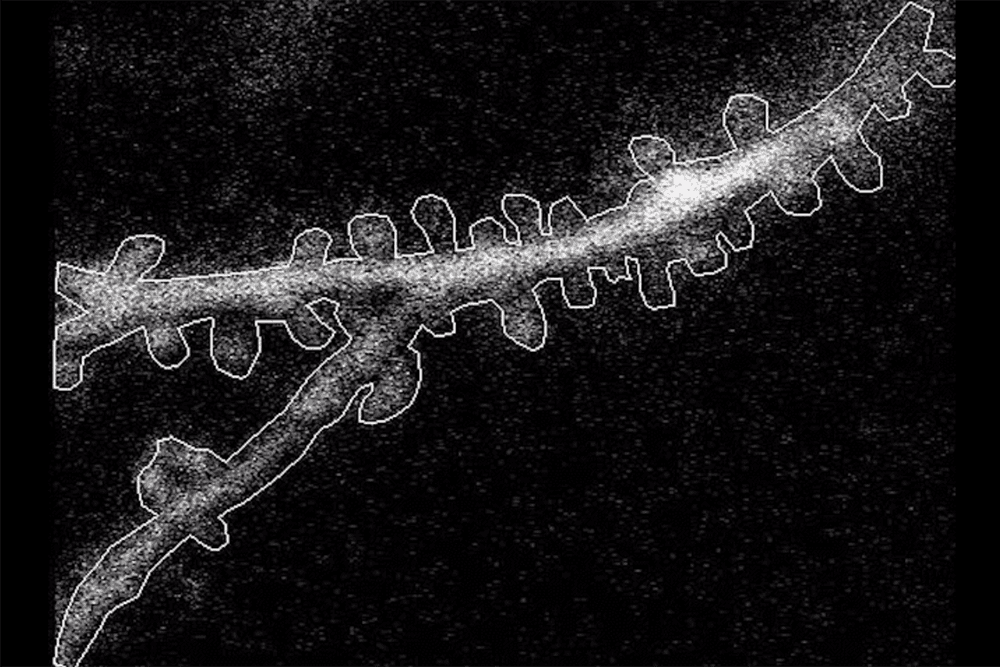
Neurons in our brain’s visual cortex follow specific rules to make sense of what we see. Furthermore, they receive many signals through thousands of connections called synapses. Moreover, a new study reveals how these cells organize their inputs to perform their jobs.
Essentially, scientists watched mice view moving images. Consequently, they discovered several key rules. For example, the distance of a synapse from the cell’s center matters. Additionally, synapses form local groups of activity. Specifically, a synapse’s strong preference for a visual angle is the most critical factor. Therefore, these findings help us understand how brains process vision and what happens when this process goes wrong.
| Rule / Principle | Description | Key Observation |
|---|---|---|
| Distance from the Soma | Synaptic spines closer to the cell body (soma) are more likely to correlate their activity with the soma’s overall response. | The soma’s retrograde signal, which aligns spines with its preferences, is more detectable near the soma than far away. |
| Local Clustering | Spines within ~5 microns of each other form correlated enclaves of activity on visually responsive neurons. | Spines just outside the 5-micron boundary are less likely than chance to join, suggesting isolated pockets that sharpen visual responses. |
| Apical vs. Basal Dendrites | Basal dendrites receive more raw visual input overall; apical dendrites receive broader cortical input. | Apical dendrites on visually responsive neurons carry significantly more visually responsive spines than those on non-responsive neurons. |
| Orientation Selectivity | A spine’s selectivity to the orientation of a preferred grating stimulus determines how strongly it correlates with the soma. | By a wide margin, orientation selectivity was the single most important factor explaining soma–spine correlation, outweighing distance, reliability, and dendrite type. |
Neuronal Rules for Visual AI
Implications for Vision AI Systems
“The configuration of inputs, the kind of organization, the assembly of neurons that modulate each other to generate an action potential is the essence of how brain circuits process information.”
Ultimately, this study reveals how brain cells organize their inputs to process what we see. In conclusion, understanding these rules helps everyone better grasp how the brain works. Looking ahead, these findings may guide future research on vision disorders and support inclusive approaches to neuroscience for all people.
Ultimately, this study identifies key rules that neurons in the visual cortex use to organize their synaptic inputs. In conclusion, understanding these synaptic rules provides a vital framework for exploring how neural circuits function and how disruptions may affect vision.