LLMs & Models Certainly Moreover Specifically
2 min read
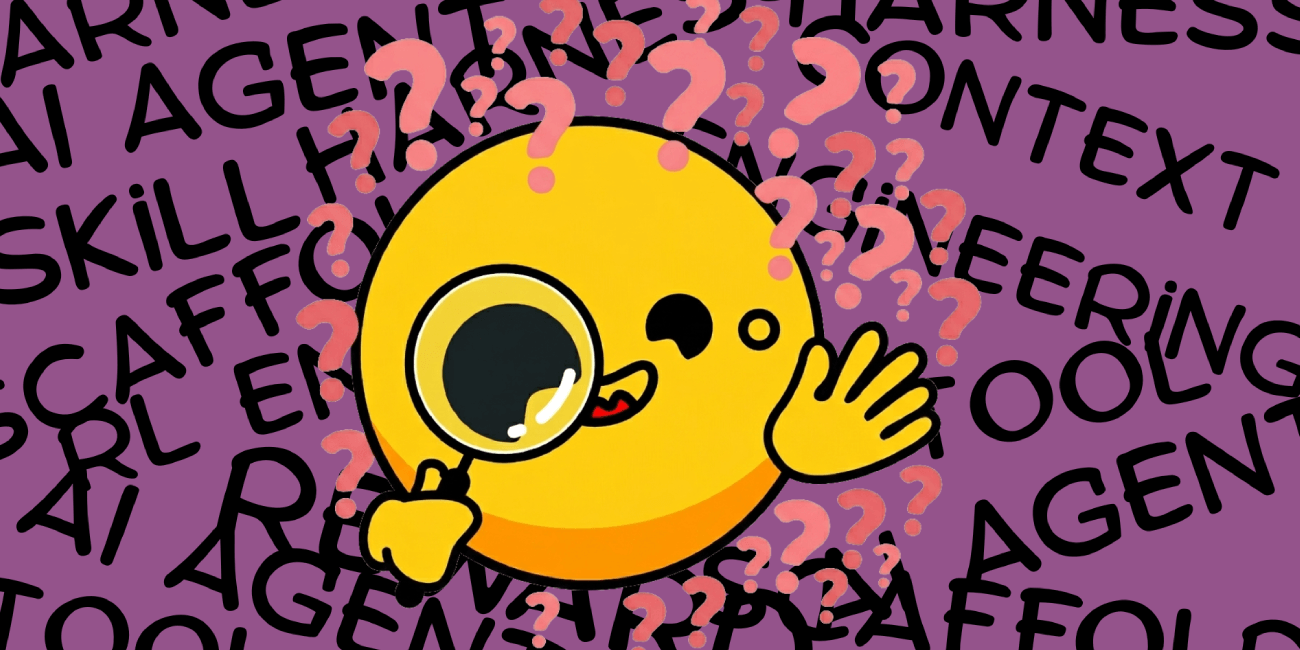
Certainly, fast-moving fields like AI often create confusing terms. Moreover, this article clearly explains key words like harness and scaffold. Specifically, it helps newcomers and developers understand how modern AI agents work.
Additionally, knowing these terms helps you use tools better. For example, it shows why Claude Code acts differently from other agents. Similarly, it provides a clear mental model for the future of AI. Consequently, this knowledge is fundamentally important for anyone building or using AI.
| Term | Core Role | Relationship to Other Concepts |
|---|---|---|
| Model | The LLM itself — takes text in, produces text out. No memory between calls, no loop, no execution capability. | Expresses intent to use tools but cannot execute them. Becomes an agent only when wrapped in scaffolding and a harness. |
| Scaffolding | The behavior-defining layer: system prompt, tool descriptions, output parsing rules, and context/memory management. | Shapes what the model sees and how it interprets the world. Distinguished from the harness most clearly in training pipelines. Sometimes used broadly to include all surrounding infrastructure. |
| Harness | The execution loop: calls the model, handles tool calls, decides when to stop, manages errors and guardrails. | Makes the agent run. Agent = Model + Harness is a common framing. Some products (Claude Code, Codex) use “harness” to mean everything non-model, blurring it with scaffolding. |
| Agent | A model plus its full surrounding system that enables it to act in a loop — observe, decide, act — rather than just respond. | Composed of model + harness + scaffolding. Two agents using the same model feel different because their harnesses differ. The policy defines behavior; the agent is the system that acts. |
| Policy | The behavior an agent follows — given a situation, the probability distribution over possible actions. | Partly learned in model weights, partly shaped by scaffolding and harness. The same model with different prompts/tools produces different policies. A policy is not an agent; it defines one dimension of it. |
AI Agent Terms Explained
In particular, the rapid evolution of AI agent terminology causes confusion for everyone. Moreover, terms like scaffolding and harness are often mixed up. Furthermore, a scaffold defines an agent’s behavior, while a harness executes it. Consequently, understanding context engineering is crucial for both developers and users. Therefore, clear definitions help people build and discuss agents more effectively.
Implications for AI Agent Development
This indicates the chart clarifies AI agent terminology. Therefore, harness is the core execution loop, while scaffold defines agent behavior through prompts and tools. Similarly, an agent combines both a model and a harness to act. Moreover, this clear distinction helps newcomers navigate the evolving field.
“Claude
Ultimately, clear definitions for terms like harness and scaffold help everyone in the AI community work together better. Consequently, this shared understanding reduces confusion for newcomers and experts building agents.
In conclusion, a practical glossary supports the responsible development and use of AI tools. Thus, the effort to ground this vocabulary is a valuable step for the future of the field.