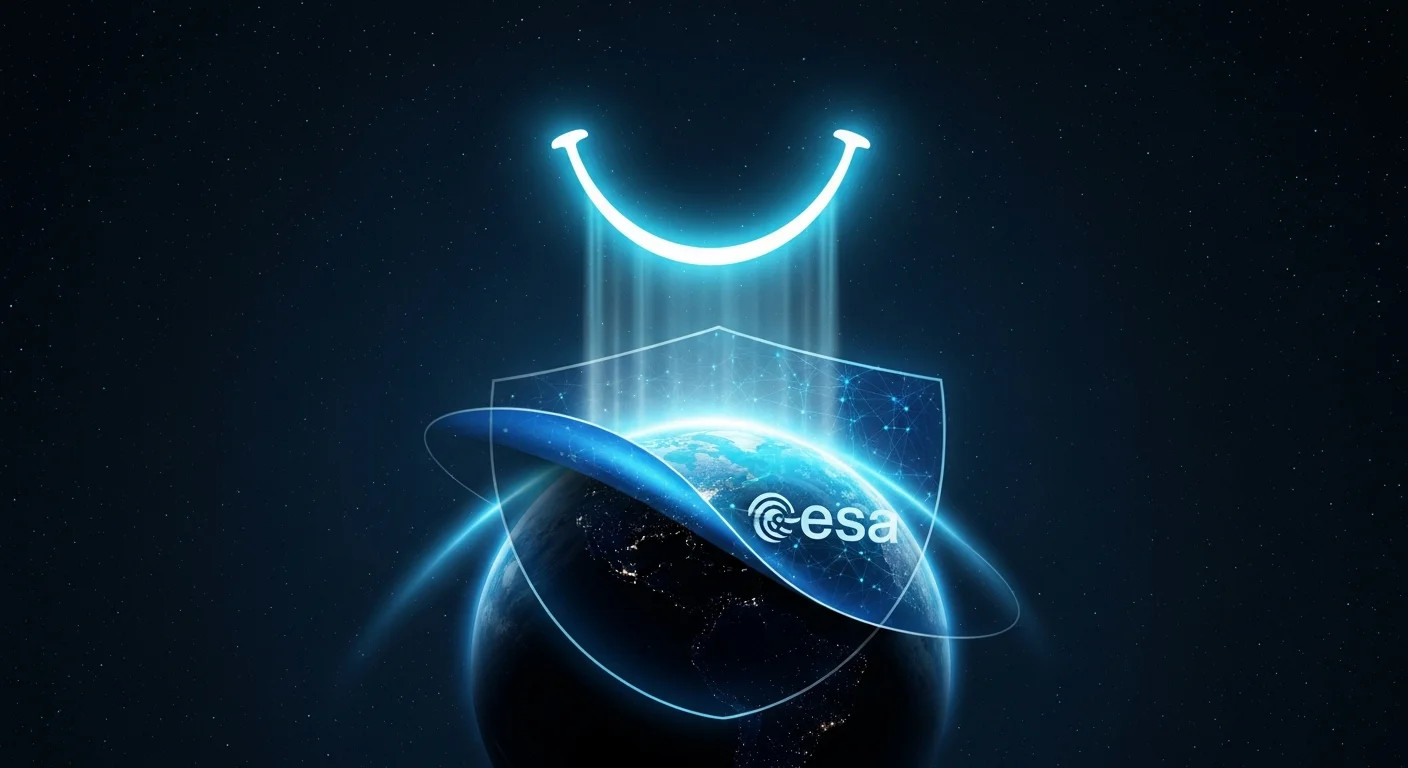
ESA – Smile lifts off on quest to reveal Earth’s invisible shield against the solar wind
2 min read
Similarly, this is a major joint effort. Furthermore, they are using an X-ray camera and an ultraviolet camera to gather new data.
Therefore, this mission will help us understand space weather. Ultimately, it could help keep astronauts and technology safe.
| Aspect | ESA (Europe) | CAS (China) |
|---|---|---|
| Science Instruments | Soft X-ray Imager (SXI), built by University of Leicester & partners across Europe; contributes to the Ultraviolet Imager (UVI) | Provides three of the four science instruments (including UVI lead) |
| Spacecraft Hardware | Payload module (carries 3 instruments, control unit & communications), built by Airbus Defence and Space in Spain | Spacecraft platform (bus) |
| Launch & Operations | Launcher (Vega-C), Assembly Integration & Testing facilities, and mission operations support | Day-to-day spacecraft operations once in orbit |
| Financial Commitment | €130 million across 25+ contracts with 40+ companies & institutes; contributions from 14 European countries | Not publicly specified; major instrument & platform funding |
| Collaboration Scope | Largest European contributions from the UK and Spain; hundreds of staff over 7 years | First ESA–China jointly selected, designed, built, launched & operated mission; 25-year cooperation history |
Revealing Earth’s Invisible Shield
Revealing Earth’s Invisible Shield
This indicates the successful launch of a vital mission to study Earth’s magnetic shield. Moreover, it uses unique X-ray and ultraviolet cameras to observe the shield’s reaction to solar wind. Similarly, its success stems from strong international collaboration. Therefore, the collected data will greatly improve our understanding of space weather. Hence, this helps protect people and technology in space. As a result, a major scientific endeavor is now underway.
“We are about to witness something we’ve never seen before – Earth’s invisible armour in action.”
Ultimately, the Smile mission marks a historic step in understanding our planet’s invisible shield. In summary, this collaboration between ESA and CAS shows what we can achieve together. Looking ahead, the data collected will help protect astronauts and technology for years to come. Thus, humanity moves closer to safely exploring the wonders of space.
Ultimately, the successful launch of the Smile mission marks a major step in studying Earth’s protective magnetic field. Therefore, it demonstrates strong international collaboration between ESA and China.
Consequently, the mission will provide the first detailed views of how Earth’s magnetosphere reacts to solar storms. In summary, this partnership enhances global understanding of space weather and promotes peaceful space exploration.