
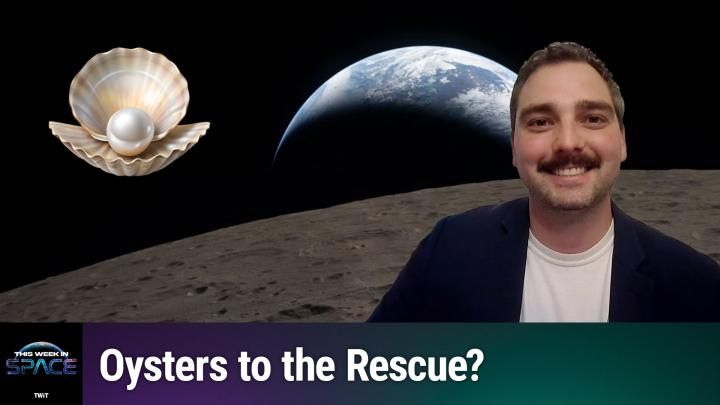
**From Ocean to Orbit: How Oysters Could Sustain Astronauts on Mars Missions**
2 min read
Certainly, oysters are not the first food one thinks of for space travel. However, a new podcast explores their surprising role in future missions. Furthermore, the discussion reveals innovative research into space agriculture.
Moreover, scientists are studying how these shellfish can help. Importantly, they can filter water and provide protein for astronauts. Consequently, this research could make long trips, like to Mars, more sustainable. Thus, this work is vital for the next steps in space exploration.
| Feature | Description | Application in Space Travel |
|---|---|---|
| Water Filtration | Oysters naturally filter and purify water as part of their biological processes | Reduces need for mechanical water purification systems on long-duration missions to Mars |
| Protein Source | Oysters are a nutrient-dense, ready-to-harvest source of high-quality protein | Provides astronauts with a sustainable, on-board food supply during deep-space voyages |
| Closed-Circuit System | Fully automated, self-sustaining aquaculture environment designed for microgravity conditions | Enables continuous food and water recycling without crew-intensive maintenance |
| Student-Led Research | Harrisburg University students designed, built, and operated the prototype system | Demonstrates feasibility of next-generation space life-support through academic collaboration |
| Space Analog Testing | System tested in a simulated space environment to replicate mission conditions | Validates oyster biology and aquaculture technology before deployment in actual microgravity |
Oysters in Space: Future Astronaut Diet
In addition, space agencies are exploring oyster aquaculture for future missions. Consequently, this could create closed-loop life support systems. As a result, they provide a sustainable protein source for astronauts. Therefore, such systems may help establish long-term Mars habitats. Moreover, student-led projects show everyone can contribute innovative solutions to deep space travel.
Ultimately, the exploration of oysters for space use highlights innovative life support strategies. Therefore, these bivalves can filter water and provide nutrition during long missions. Consequently, such research fosters sustainable human presence beyond Earth.
As a result, integrating biological systems into spacecraft design could improve astronaut well-being. Accordingly, this approach encourages collaborative efforts in space biology. In summary, oysters symbolize practical advances toward self-reliant space habitats.