Global Policy Furthermore Libya However Moreover
2 min read
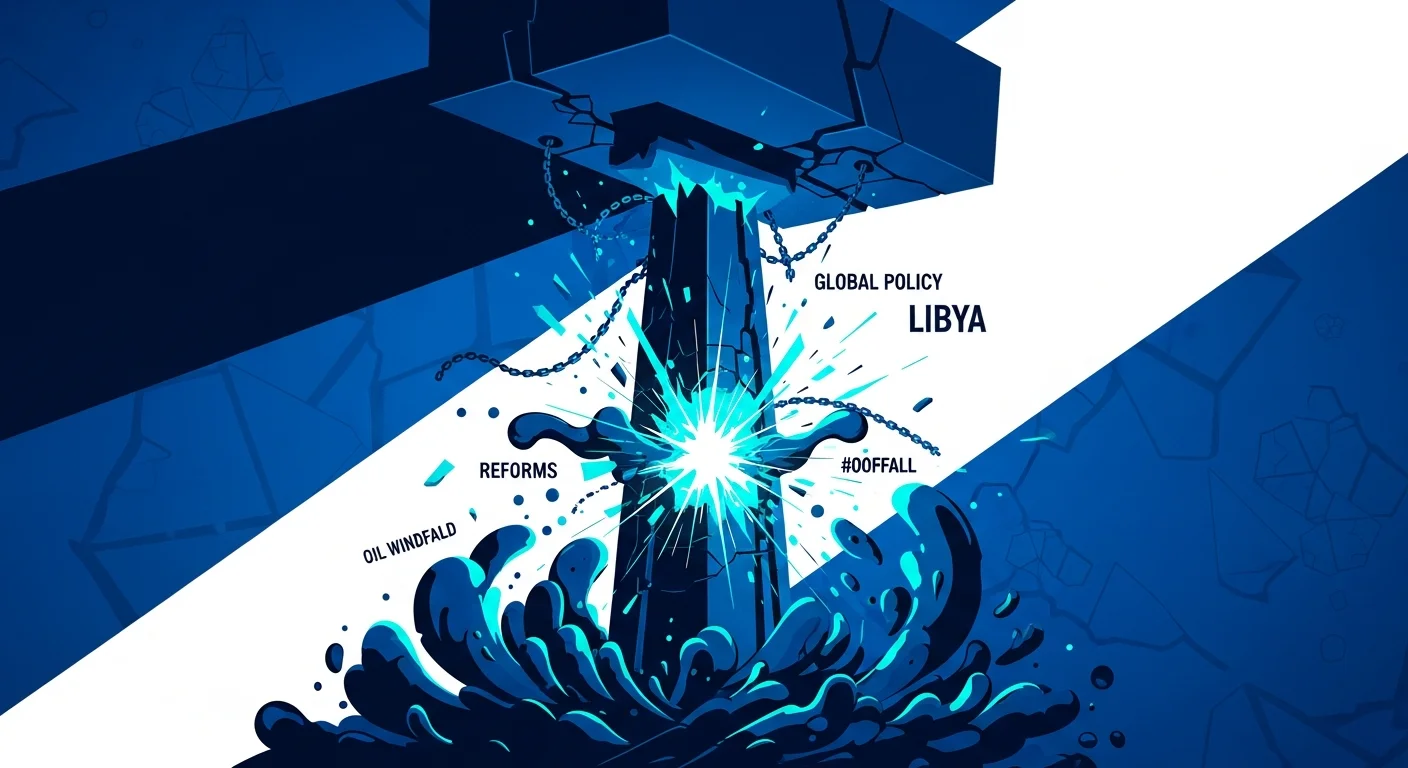
Furthermore, Libya is producing oil at a ten-year high. However, a stronger economy is not guaranteed. Moreover, the public faces high living costs. Consequently, experts say the oil windfall alone will not fix the country’s problems.
Therefore, a new unified budget offers two paths. Similarly, one path ignores accountability for short-term gain. In contrast, the harder path builds transparency and oversight. Essentially, this second choice could create real stability for the Libyan people.
| Time Period | Economic Event | Immediate Impact |
|---|---|---|
| April 2025 | First dinar devaluation (13.3%) | Failed to close gap with black market rate; rise in cost of living. |
| January 2026 | Second dinar devaluation (14.7%) | Official rate moved to 6.37/dollar; black market rate reached 10/dollar by late February. |
| February 2026 | Cost of living crisis peaks during Ramadan | Goods rationing, fuel shortages, cash shortages, and public protests erupt across western Libya. |
| April 2026 | Unified budget agreement signed | Potential path to stability, but success hinges on transparency, oversight, and accountability in implementation. |
Oil Windfall Won’t Fix Libya
Without Reforms, Oil Windfall Futile
“Libya’s national wealth is being absorbed into a distorted political economy that fuels unaccountable spending and weaponizes oil revenue.”
Ultimately, Libya’s oil windfall cannot fix its economy alone. Therefore, revenues flow into a system of parallel spending and weak oversight. Consequently, ordinary Libyans face rising costs despite higher production. Accordingly, without reform, oil wealth stays out of reach for the public.
Thus, the unified budget offers a real but fragile opportunity for change. In conclusion, transparency and accountability must guide its implementation to serve all people. As a result, the United States should press Libyan leaders toward this harder path. In summary, only genuine reform can turn oil wealth into lasting prosperity.