
# Hatchback Audio Decoded: Why Your Car’s Design Creates a Bass Problem and How to Fix It
2 min read
Building the perfect front audio environment in a hatchback requires understanding how sound behaves in a small car space.
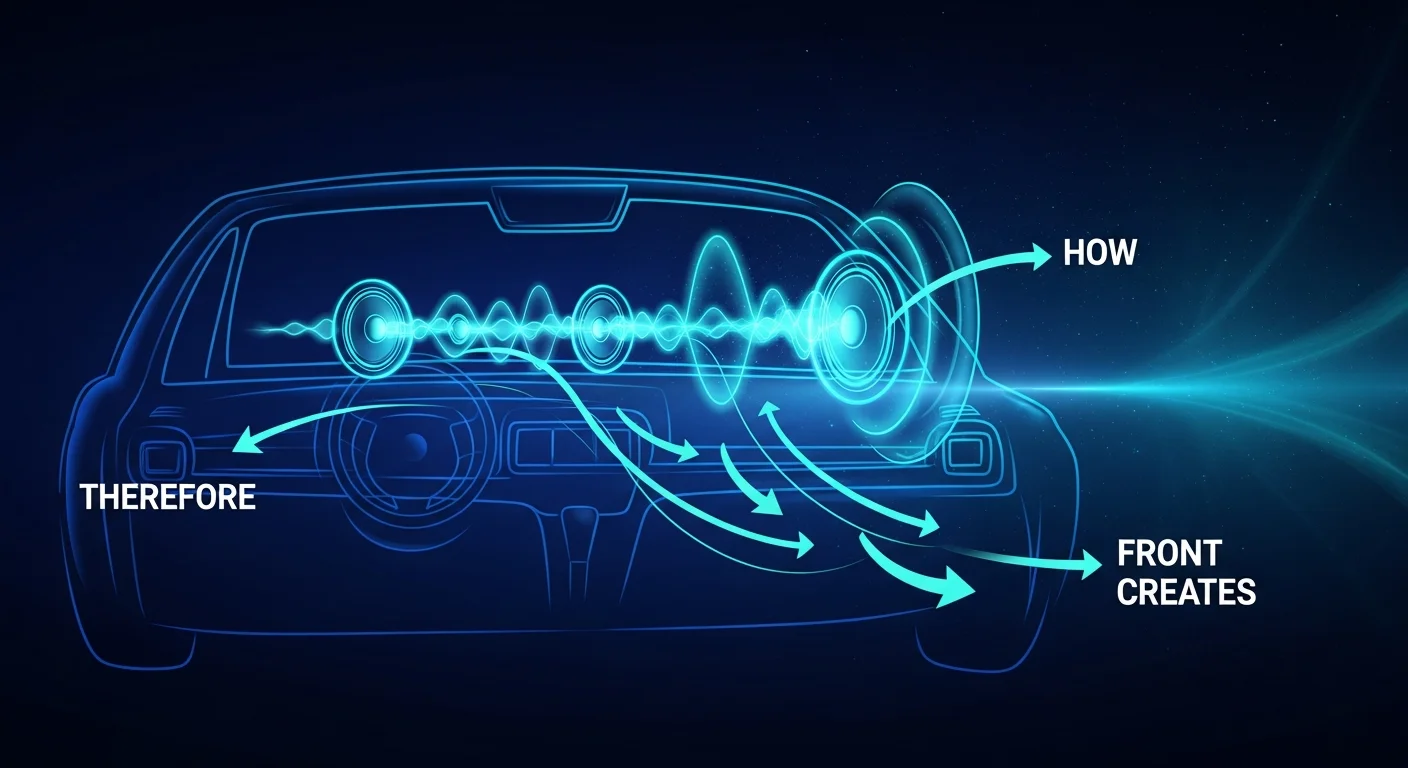
Furthermore, hatchbacks present a unique challenge because low-frequency sounds bounce off the steep rear window. Moreover, these reflected waves create muddy bass that overwhelms the delicate highs up front. However, focusing on the front soundstage solves this issue. Specifically, placing quality component speakers in the doors and dashboard anchors music where the listener sits. Additionally, using a digital signal processor balances timing so sound reaches both ears equally. Consequently, the driver hears crisp vocals and clean bass without distortion. Therefore, any hatchback owner can enjoy studio-quality sound with the right approach.
| Optimization Strategy | Key Benefit | Hatchback-Specific Consideration |
|---|---|---|
| Component Speaker Installation (Tweeters on Pillars + Woofers in Doors) | Creates a tall, wide soundstage with precise high-frequency imaging anchored to the dashboard | Elevated tweeter placement counters the low, open cabin that normally pulls the stage downward |
| Digital Time Alignment via DSP | Eliminates perceived asymmetry so vocals and center images appear directly in front of the driver | Compensates for the driver’s off-center seating position that is unavoidable in any hatchback cabin |
| Speaker Phase Wiring Verification | Ensures all cones move in unison, preventing midbass cancellation and preserving vocal clarity | Phase errors are amplified in hatchbacks because reflected rear waves interact destructively with front output |
| Crossover Frequency Tuning (80 Hz High-Pass / Low-Pass) | Smoothly blends front door drivers with the rear subwoofer while protecting speakers from over-excursion | Keeps omnidirectional bass low in the cargo area, reducing rear-window reflections that muddy the front stage |
Front Audio Environment in Hatchbacks
In particular, hatchback acoustics challenge everyone with rear reflections muddying the sound. Therefore, building a strong front soundstage is key. Consequently, this isolates the primary audio image. Similarly, digital time alignment then corrects for each person’s off-center seating. Moreover, this ensures sound waves arrive together for a stable, focused center image.
Transforming Hatchback Audio Experience
“By focusing your efforts on optimizing the front audio environment, you can anchor the music directly on your dashboard. This strategic focus ensures that the rear audio elements function purely as subtle background fill rather than a distracting primary source.”
Ultimately, a perfect front audio environment counters hatchback acoustics. In conclusion, prioritizing front-stage components creates a stable primary source. Looking ahead, digital calibration like time alignment remains key. As a result, vocals anchor clearly on your dashboard. Therefore, you achieve an immersive, balanced listening experience. Thus, the rear becomes subtle fill. Hence, focus on the front for clarity. In summary, this approach optimizes your space. To conclude, it transforms your cabin. Finally, enjoy pristine sound in your vehicle.
Ultimately, building a clear front soundstage in a hatchback means focusing on the dashboard area. In conclusion, this approach uses dedicated component speakers to create a direct and immersive audio image.
Therefore, a digital signal processor is essential for precise time alignment and phase correction. Thus, these calibration steps ensure all front speakers work together perfectly for every listener.