
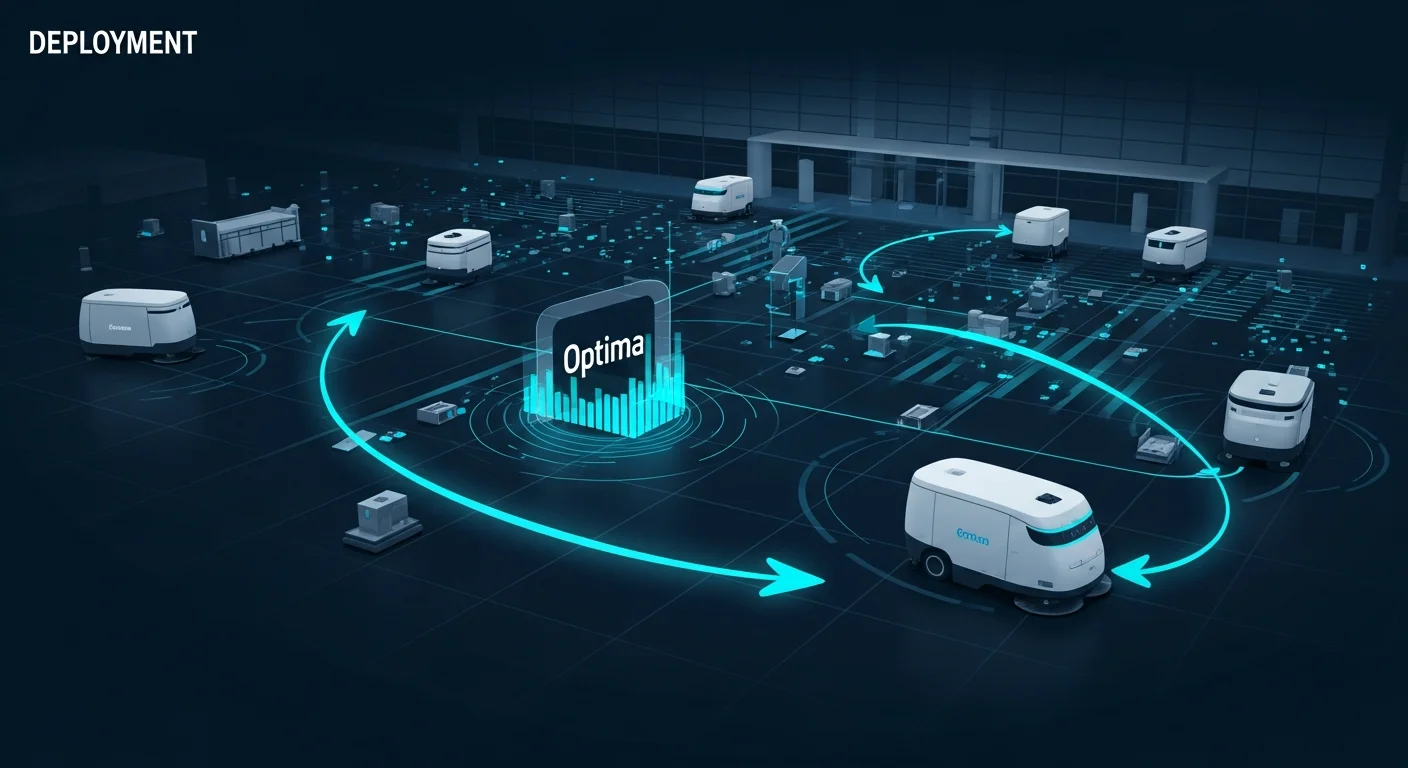
Optima deploys autonomous cleaning robots across major airports in Spain
2 min read
Certainly, cleaning major airports is a huge job that runs 24/7. Therefore, a company called Optima is using autonomous cleaning robots to help. Furthermore, they are testing this new hybrid model in seven busy Spanish airports, including Barcelona.
Moreover, this plan makes cleaning faster and more consistent. Additionally, it lets human teams focus on more detailed work. Importantly, the robots also help save water and energy, which is better for the environment. Thus, this technology improves the airport for both workers and travelers.
| Feature | Autonomous Robots (Daytime) | Conventional Machines (Nighttime) |
|---|---|---|
| Primary Role | Continuous scrubbing and sweeping in high-traffic zones during operating hours | Deep cleaning and reinforcement of areas when passenger flow is low |
| Operator Involvement | Single operator can supervise multiple AMRs simultaneously, expanding coverage | Dedicated operator required per machine for direct manual control |
| Key Technology | Tennant AI-powered autonomous navigation designed for complex commercial environments | Tennant conventional scrubbers and sweepers with manual operation |
| Sustainability Impact | Optimises water, energy, and cleaning product usage per cycle; reduces environmental footprint | Higher resource consumption per cycle; relies on operator efficiency for optimisation |
| Data & Reporting | Real-time monitoring, performance analytics, and traceability systems generate daily and monthly reports for AENA | Limited to manual logging; lacks integrated data-driven decision support |
Autonomous Cleaning Robots Deployed
In addition, autonomous cleaning robots now work in major Spanish airports. Consequently, they boost operational efficiency by handling repetitive tasks. As a result, people can focus on complex work. Therefore, this human-robot collaboration improves service quality. Similarly, the robots optimize resource use, aiding sustainability. Moreover, their presence enhances the passenger experience through innovation. Furthermore, everyone benefits from cleaner, more reliable facilities.
Reframing Human-Robot Collaboration
This indicates a major shift in airport cleaning operations. Therefore, robots handle repetitive tasks while people focus on specialized work. Moreover, this hybrid model boosts efficiency and sustainability. Consequently, it reduces environmental impact and improves service quality. Thus, both travelers and cleaning teams benefit from this inclusive, innovative approach.
“At Optima, we particularly value that these solutions improve productivity and service quality, while reinforcing our commitment to more sustainable and environmentally responsible management, aligned with the environmental objectives of AENA and the airport itself.”
Ultimately, Optima’s use of cleaning robots shows how technology helps in tough jobs. In conclusion, this creates an innovative collaboration between people and machines. Looking ahead, such tools support cleaner, more efficient travel for everyone. As a result, human teams can focus on more complex tasks. Therefore, service quality and sustainability improve. Thus, it’s a smart step for busy airports. Hence, passengers benefit from a better environment. In summary, this model supports progress for all. To conclude, it highlights a positive path forward. Finally, it shows a commitment to both people and innovation.
Related Links
Ultimately, the integration of autonomous cleaning robots establishes a new standard for efficiency and service quality in demanding 24/7 environments. Therefore, this human-robot collaboration model empowers people by allowing teams to focus on complex tasks. Consequently, airports benefit from improved consistency, optimized resources, and enhanced sustainability.
As a result, Optima’s approach demonstrates a practical and scalable future for facility management. Thus, this innovation is a strategic ally for communities and infrastructure worldwide. Accordingly, it shows how technology can support both operational goals and a better experience for everyone.